suit?
Elderly life care provides assistance with daily matters such as meals, daily living, cleaning, moving around, and companionship. First understand the elderly’s habits and family arrangements, and then distinguish between living assistance, general housework and services that require professional qualifications.
- Families whose elders need assistance with some daily tasks
- Families whose families want to increase daytime companionship and daily life coordination
- Families who need clear day shift, home and family handover arrangements
Look at the work content separately
Communicating in terms of specific tasks is more helpful than just saying you need an aunt or a cleaning session. The following are common areas of discussion for this service.
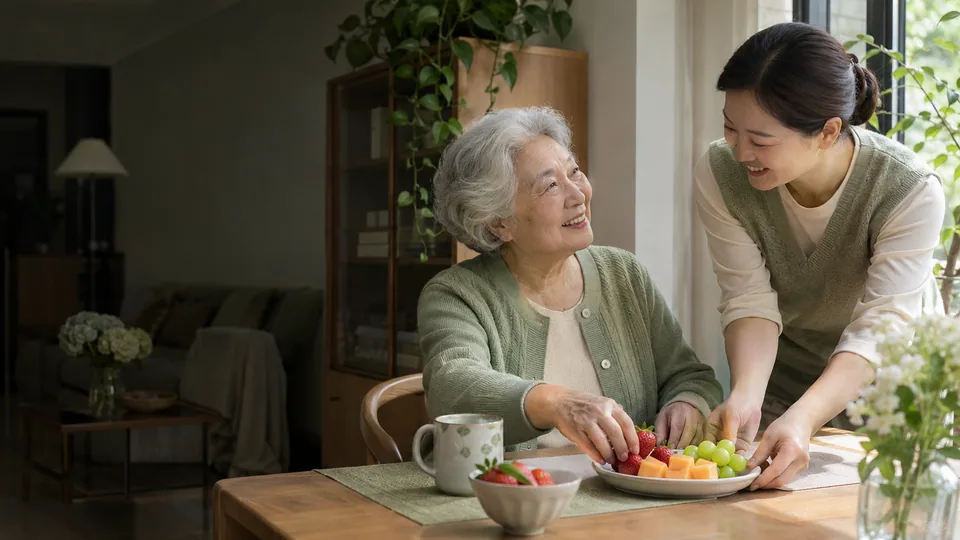
Living and dining
Communicate with the elderly about getting up, dressing, meal preparation and meal assistance according to their existing living habits. Be honest about the specific level of assistance and avoid using the words "self-care" or "non-self-care" to summarize all needs.
Living environment
Organize the spaces, clothing and daily necessities commonly used by the elderly, and explain home safety precautions. Elderly care and housework should be discussed separately, and the workload cannot be infinitely superimposed.
Companionship and daily activities
Understand how the elderly would like to communicate, what daily activities they like, and their need for companionship when going out. Respect personal wishes, do not make decisions based on age, and do not promise health improvement.
Family communication
Establish a concise handover method, agree on who will be the main contact person, what situations require timely contact, and how to explain changes in living arrangements. Emergency situations are handled according to the family's existing plans.
What matters need to be agreed separately?
- Not a substitute for medical care, treatment, rehabilitation or diagnosis
- Do not default to medication adjustments, invasive procedures, or high-risk removals
- Do not assume all housework and care of other family members by default
Increased responsibilities, changes in time, or different site conditions should be addressed prior to beginning. For matters requiring professional qualifications, equipment or protection, first check capabilities and service boundaries.
Fees should be compared within the same range
Different working methods, responsibilities and working conditions cannot be directly compared with just one total price. When consulting, ask about the following factors separately, and then check the charging cycle, service fees and additional items.
- Level of living assistance required and specific workload
- Day shift, home, day and night and rest arrangements
- Whether to consider both meals and cleaning of spaces commonly used by the elderly
- Personnel remuneration, organizational fees and other service conditions
Unverified service unit prices are not displayed here. The public introduction does not replace the operator's actual quotation and contract.
After completion, how to hand over and check?
- Living assistance is provided according to the list and the wishes of the elderly
- There is a clear handover of daily life matters and changes
- Housework and care priorities are followed
For matters that have changed, been omitted, or need to be continued, try to record the specific location, tasks and time, and communicate through formal channels. Clear records make it easier to solve problems than general comments.
Frequently asked questions about senior living care
Are elderly care workers the same as hospital caregivers?
Responsibilities, working conditions, and qualification requirements may vary between scenarios. Daily help at home cannot be directly equated to hospital or medical care. First describe the actual tasks and then determine the direction of the service.
How to tell how much help an elder needs?
It is more conducive to communication to describe what can be done independently and which steps require help in terms of meals, dressing, cleaning, walking, companionship, etc., rather than generally saying that care is needed.
If the family member is not at home, how to hand over the job?
Clarify the main contact person, frequency of communication and matters requiring immediate contact. Daily records are based on the principles of necessity and conciseness, and information involving the privacy of the elderly is only provided to appropriate personnel.